How Bulk Carpet Recycling Works
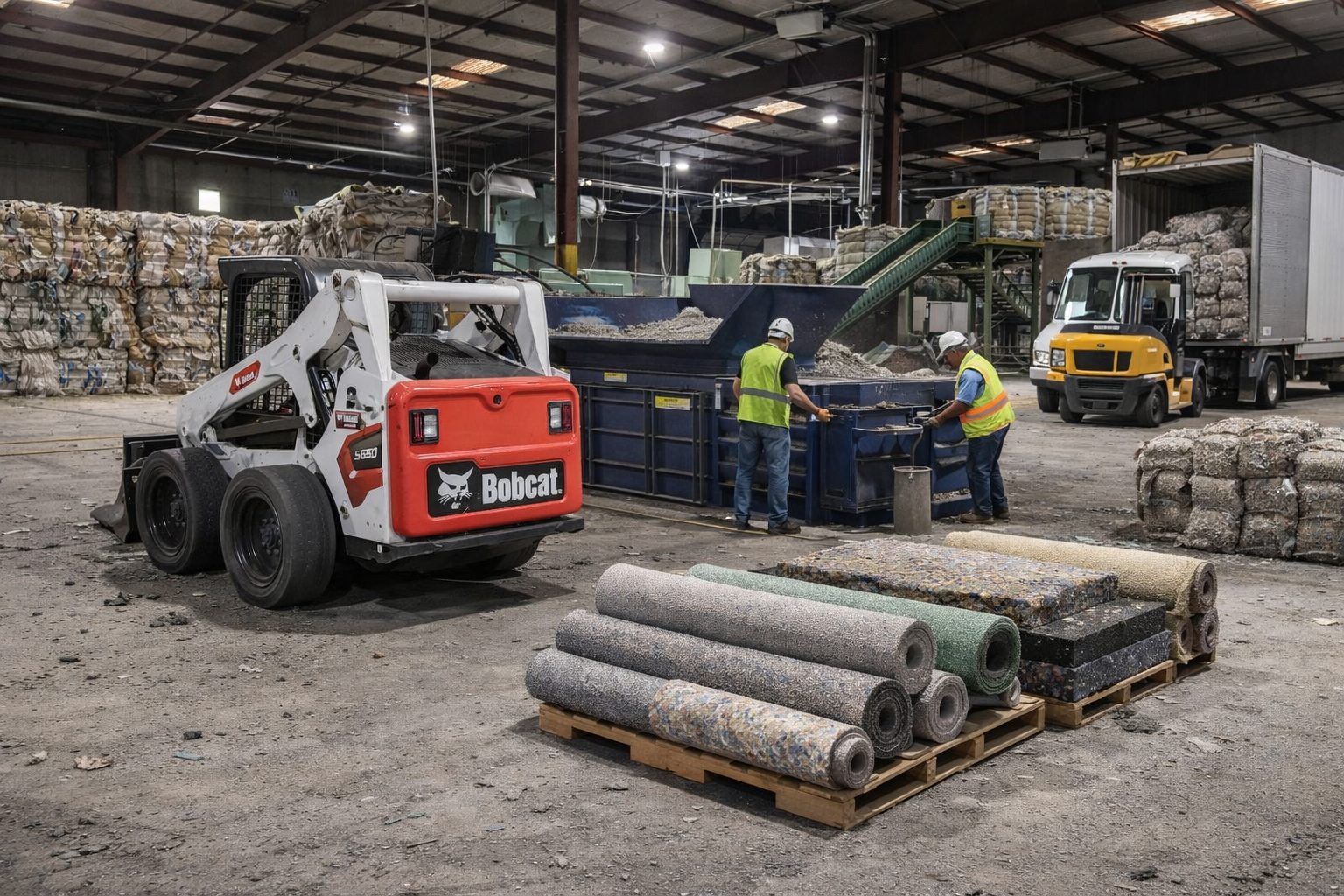
When you’re removing carpet at scale, the hardest part is usually not the labor. It’s figuring out what to do with the mountain of material afterward. Bulk carpet recycling is a straightforward process when it’s handled by a facility built for carpet and pad specifically.
Step 1: Collection and Transport
Carpet and pad are bulky and heavy. Bulk recovery works best when the logistics are built around large volumes, including trailers and scheduled pickups so your crew can keep moving.
Step 2: Sorting (Yes, It Matters)
Carpet loads often include a mix: broadloom, tile, pad, tack strips, and jobsite debris. Clean loads process faster and typically cost less to handle. Keeping obvious trash out of the pile makes a real difference.
Step 3: Processing and Material Recovery
Once received, carpet and pad are processed so usable components can be separated and repurposed. The goal is to divert material from landfills and move it into reuse channels.
Step 4: Diversion Documentation
Many commercial and government projects require proof of responsible disposal. A carpet recycling program can support your documentation needs for diversion reporting and sustainability records.
Frequently Asked Questions
What materials can be included?
Bulk loads may include broadloom carpet, carpet tile, and carpet pad. Keep materials as clean and dry as possible, and contact the team to confirm the material mix for your project.
Do you offer pickup or drop-off?
Service options can include drop-off, pup trailers, and full-size trailers. The right option depends on the material volume, location, and project schedule.
What information should I provide for a quote?
Please share the material type, estimated volume, project location, and preferred pickup window. Those details help the team recommend the most practical service option.
Can you help with diversion documentation?
Tell the team if your project requires diversion documentation or sustainability reporting. They can discuss the information available for your project.
Bottom Line
If you’re handling bulk removals, recycling is usually the cleanest path operationally: fewer landfill trips, better site flow, and a responsible outcome for the material.
Have a large project coming up? Contact us with your estimated volume, material type, and timeline, and we’ll help you plan the easiest pickup and processing approach.